World AIDS Day: Research from Across Mass General Brigham
December 1 marks the 35th commemoration of World AIDS Day, an annual event that reminds us that HIV and HIV-related stigma remain public health threats. Research and innovative treatments have helped drive progress over the last four decades of the HIV/AIDS epidemic, and ongoing research efforts are essential to continue making strides in prevention, treatment and, ultimately, toward a cure.
Researchers at Mass General Brigham are working on some of the most challenging problems and pressing questions related to HIV/AIDS. Check out some of our most recent research stories below.
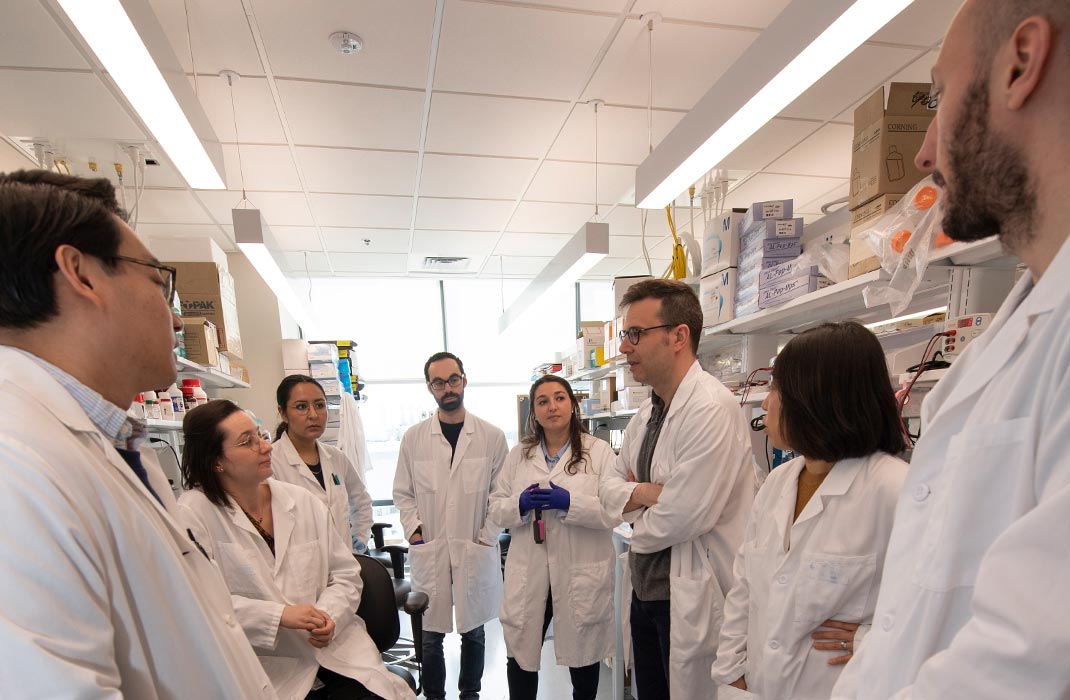
Antiretroviral therapy (ART) has helped extend the lives of patients, but currently available treatment does not cure HIV infection. The virus persists lifelong, and antiviral drugs need to be taken indefinitely to suppress the virus. HIV-1 reservoir cells – infected cells that are highly durable – are one of the reasons HIV remains so difficult to cure since these cells cannot be eliminated by currently available antiretroviral agents. While the cells may not actively produce new copies of the virus, they give HIV a safe harbor in which to hide, potentially for years, and become active again.
Mathias Lichterfeld, MD, PhD, is a member of the Ragon Institute of Massachusetts General Hospital, MIT and Harvard and a staff physician in the Infectious Disease Division at Brigham and Women’s Hospital. The Lichterfeld lab studies samples from patients with HIV to learn about HIV-1 reservoir cells and pinpoint their vulnerabilities.



The recent large-scale randomized REPRIEVE trial led by Massachusetts General Hospital’s Steven K. Grinspoon, MD, found that daily statin use by HIV positive participants reduced their risk of experiencing a major adverse cardiovascular event (MACE) by 35% in comparison to the control group. Statin use also reduced the risk of MACE-related deaths by 20%. These positive impacts were so significant that the trial was halted early for efficacy.
About one in five new HIV diagnoses in the United States occur among youths ages 13 to 24 years. Young men who have sex with men (YMSM) accounted for 81% of new diagnoses in this age group in 2019.
When taken daily as prescribed, oral preexposure prophylaxis (PrEP) medication reduces the risk of sexually acquiring HIV by about 99%.
In a recent modeling study, Anne Neilan, MD, MPH, a physician investigator in the Division of Infectious Diseases at Massachusetts General Hospital, led a team that compared the cost and clinical effectiveness of providing daily generic PrEP medication to YSSM compared to annual HIV screening alone.
The model projected that over 10 years, daily generic PrEP treatment would reduce new HIV acquisitions from 37% to 30% and decrease costs by $5,000 per person, compared to annual screening.
These findings held up across several scenarios, including a range of drug prices, HIV incidence rates, and treatment retention rates.

A 2020 study led by Ruanne Barnabas, MD, chief of the Division of Infectious Diseases at Massachusetts General Hospital, showed that providing community-based HIV care (compared to clinic-based care) in South Africa and Uganda could improve outcomes and reduce costs.
In a recent follow-up study, Barnabas and team used health economics modeling analyses to project that by 2060, scaled-up community-based HIV care could avert 28% of HIV-associated deaths and new infections in these hard-hit countries.
Because more men would be likely to access treatment that controls their infection in the community-based model, adolescent girls and young women aged 15-24 would see the greatest overall benefit in risk reduction, with a projected 31% reduction in new HIV infections, the researchers found.

Gaiha received this award for his project, “Harnessing Highly Networked HLA-E-Restricted CTL Epitopes to Achieve a Broadly Effective HIV Cure,” which aims to create a universal T cell vaccine for HIV.