Treating opioid use disorder in the ED and beyond
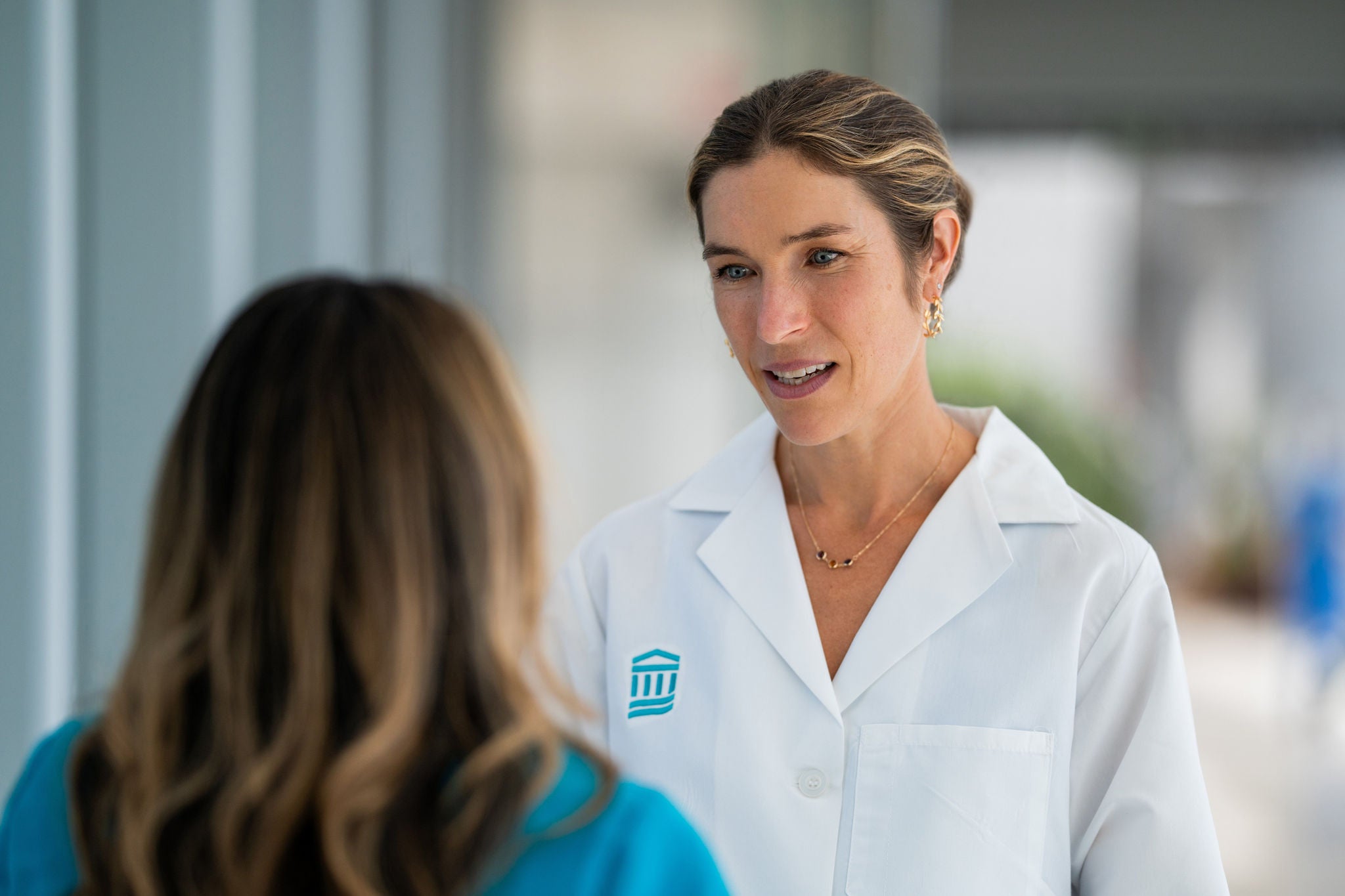
When a patient experiencing an opioid overdose presents to the Emergency Department (ED), it can be an opportunity to address more than just the immediate crisis. It can also be a critical moment to begin lifesaving treatment for their opioid use disorder and a chance to connect them with ongoing care.
At Mass General Brigham, a long-standing partnership between Addiction Medicine and Emergency Medicine is helping make that possible.
What began more than a decade ago at Massachusetts General Hospital has evolved into an integrated approach that combines ED treatment, addiction consultation and follow-up care through low-barrier bridge clinics — outpatient centers that support addiction recovery. That model of care is now in place at Brigham and Women’s Hospital and Brigham and Women’s Faulkner Hospital and is beginning to inform how Mass General Brigham delivers addiction care in EDs across the system.
For Sarah Wakeman, MD, director of the Program for Substance Use and Addiction Services at Mass General Brigham, the ED represents a particularly important opportunity to reach patients.
“So many of our patients come through the ED. It’s a critical touchpoint where we have an opportunity to initiate lifesaving treatment,” she said.
For opioid use disorder in particular, the prescription of medications such as buprenorphine (brand name Suboxone) can reduce the risk of death by more than 50%. Starting that medication in the ED and offering options for follow-up care through a bridge clinic can help reduce subsequent opioid use.
Building the model at Massachusetts General Hospital
The partnership between Addiction Medicine and Emergency Medicine that began at Massachusetts General Hospital goes back more than a decade, when prescribing medication to treat opioid use disorder in the ED was far from routine.
At the time, physicians had to complete specialized training before they could prescribe medications used to treat opioid use disorder. Ali S. Raja, MD, DBA, MPH, chair of the Department of Emergency Medicine at Mass General Brigham, was among the first Massachusetts General Hospital emergency physicians to complete the training. He and Alister Martin, MD, MPP, then worked with colleagues in Emergency Medicine and Addiction Medicine to broaden that expertise across the department.
The challenge was significant: The required training took eight hours, and the team had to find time for busy emergency physicians to complete it.
“Ultimately, we managed to get almost every emergency physician at Massachusetts General Hospital trained to prescribe buprenorphine,” Raja said. “That allowed us to roll out a program so that patients who needed it could get it from the Massachusetts General Hospital ED.”
But the prescription was just one piece of the puzzle. What made the new model of care unique was the addition of an addiction consult service and a reliable pathway to continued treatment after discharge.
“We can start the patient’s care in the ED, but then Dr. Wakeman’s team in the bridge clinic continues it,” Raja said. “We basically are running a relay race, and we hand the patient off from one of us to the other.”
That handoff is critical. A patient may arrive in the ED in the middle of the night, when an outpatient clinic is closed. Without the ED starting treatment and providing enough medication to bridge the gap until follow-up, an otherwise successful referral could break down.
Over time, the partnership solidified into a model of care based around three complementary pieces: emergency physicians equipped to start treatment, addiction specialists available for consultation at the bedside and bridge clinics that could continue a patient’s treatment after discharge. The bridge clinics were designed to have a low barrier, allowing patients to walk in without an appointment and offering both in-person and telemedicine care.
Extending the model to the Brigham
A similar approach was developed in the Brigham and Women’s Hospital and Brigham and Women’s Faulkner Hospital EDs, where emergency physicians were trained to make treatment initiation a routine part of emergency care. A bridge clinic eventually provided a destination for patients after they left the ED. But one element of the model was missing: real-time access to a dedicated addiction consult service.
That changed this year as Addiction Medicine across Massachusetts General Hospital, Brigham and Women’s Hospital and Brigham and Women’s Faulkner Hospital became more integrated. A new interprofessional addiction consult team launched at the Brigham on July 1, giving emergency physicians and other care teams seven-day-a-week access to addiction specialists who can come to the bedside, engage patients and help emergency physicians make treatment decisions.
For Raja, the shift has been a natural extension of the broader integration of Emergency Medicine across Massachusetts General Hospital and the Brigham.
“It was easy because we are already working together on so much as a system,” he said. “We’re already operationalizing so many other things as a merged department, making the expansion of the opioid use disorder model another opportunity to work as one team and provide one model of care.”
One model of care across Mass General Brigham
The next challenge is expanding this single model of opioid use disorder care, which has proven effective at both Massachusetts General Hospital and the Brigham, to EDs across Mass General Brigham, where addiction resources, staffing and coverage have historically varied.
“The goal is simple,” Wakeman said. “Regardless of which ED you walk into or what hospital campus you show up at, you have access to the same quality of care and the same types of services.”
That does not necessarily mean every campus will operate identically. Rather, the teams are working toward a consistent model that gives patients and clinicians access to the core elements that have made the approach successful: clinician training and tools, medications in the ED, access to addiction expertise and reliable follow-up care.
Mass General Brigham already has resources in place to help make that transition faster across the system. Medication protocols have been developed, pharmacies have experience supporting these treatment options and clinician education that once required eight hours can now be delivered during a regular faculty meeting instead.
At Salem Hospital, where the ED sees a large population of patients with opioid use disorder, clinicians are beginning training in the model. The team plans to pair that education with standardized protocols and real-time consultation from addiction specialists.
Mass General Brigham has also received a federal grant to establish an addiction consult team and bridge clinic at Cooley Dickinson Hospital.
“We aim to give patients in Western Massachusetts access to the same core services available at Massachusetts General Hospital and the Brigham,” Wakeman said.
Treating addiction as a disease
Underlying the effort is a shift in how opioid use disorder is viewed within Emergency Medicine. Instead of treating a patient’s overdose and then discharging them once the acute crisis is over, Mass General Brigham is committed to treating opioid use disorder as a serious medical condition that requires treatment during the emergency encounter. In fact, it’s a key metric on the EDs’ High-Reliability Organization (HRO) scorecard that is monitored and addressed by Emergency Medicine leadership.
“Opioid use disorder is like any another emergency condition,” Raja said. “We focus on it just much as we focus on things like stroke and sepsis care.”
Wakeman said that focus is both a quality imperative and an opportunity to save lives.
“We have these wildly effective tools that have, in the past, been so underutilized,” she said. “But we are lucky to partner with our Emergency Medicine colleagues who recognize that not only can we do this, but we should be doing this.”
After more than a decade of building that partnership at Massachusetts General Hospital, the teams now have an opportunity to carry those lessons across Mass General Brigham, creating one model of care in which the patient’s point of entry within the system does not determine whether they have an opportunity to begin treatment and take the next step toward recovery.