Four innovative approaches Mass General Brigham investigators are taking to tackle ovarian cancer
Ovarian cancer is one of the most challenging gynecologic cancers to detect and treat, in part because symptoms are often subtle, and the disease is frequently diagnosed after it has already spread.
Researchers across the Mass General Brigham Cancer Institute are working to change that by studying how ovarian cancer develops, identifying opportunities for earlier detection and prevention, and developing more effective treatments.
From understanding how endometriosis can evolve into cancer, to studying how the tumor microenvironment affects treatment outcomes and the lifelong factors that impact ovarian cancer risk, our researchers are tackling ovarian cancer from multiple angles. Their work aims to improve outcomes for patients today while paving the way for more personalized approaches in the future.
Below, meet some of the researchers driving these efforts in the lab and learn how they hope their discoveries will advance ovarian cancer prevention, detection, and treatment.
Understanding how ovarian cancer begins
Jessica St. Laurent, MD
Investigator
Mass General Brigham Cancer Institute
Dr. St. Laurent studies how certain forms of ovarian cancer arise from endometriosis, a condition affecting millions of women worldwide in which tissue similar to the uterine lining grows outside the uterus. Her research focuses on the earliest molecular and genetic changes that occur as normal tissue transforms into ovarian carcinoma.
“Endometriosis affects roughly one in ten women, and for a small number of them it gives rise to ovarian cancer. Our lab works to understand how that transition happens at the molecular level, from the first genetic change to a fully formed tumor. Understanding that path is how we get to earlier detection, better risk counseling, and therapies designed specifically for patients with these cancers.”
Jessica St. Laurent, MD headshot
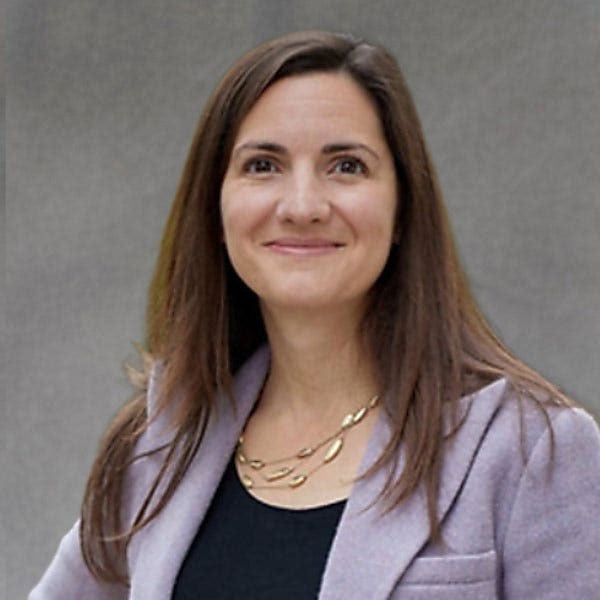
Jessica St. Laurent, MD
Understanding how ovarian cancer cells manipulate the environment around them
David Pepin, PhD
Investigator
Mass General Brigham Cancer Institute
Dr. Pepin studies how ovarian tumors interact with and reshape their surrounding microenvironment. His research seeks to define how these cancer cells manipulate neighboring cells and alter immune responses to support tumor growth and resist treatment.
“Ovarian tumors don't act alone. They send signals to nearby cells and essentially recruit them to help the cancer survive and avoid detection by the immune system. By breaking down this protective shield, we hope to help the immune system recognize and attack ovarian cancer more effectively.”

David Pepin, PhD
Advancing ovarian cancer prevention, detection and early intervention
Kathryn Terry, ScD
Investigator
Mass General Brigham Cancer Institute
Dr. Terry’s research examines how reproductive, hormonal and lifestyle factors contribute to ovarian cancer development. Her work combines epidemiologic studies (looking at patterns of disease risk in large groups of women) with biomarker research to identify women at risk for ovarian cancer and uncover opportunities for earlier detection.
“Reproductive and hormonal exposures throughout a woman’s life can influence risk of ovarian cancer decades later. My research seeks to understand how these experiences may influence cancer development and progression, to identify opportunities for prevention, detection, and interception to ultimately reduce the burden of ovarian cancer.”

Kathryn Terry, ScD
Personalizing ovarian cancer surgery
Alexander Melamed, MD, MPH
Investigator
Mass General Brigham Cancer Institute
Dr. Melamed’s research focuses on improving surgical care for women with ovarian cancer. His work examines how the timing and extent of surgery can be tailored to each patient, helping maximize treatment benefits while minimizing unnecessary risks and complications.
“Ovarian cancer surgery has long been guided by the idea that more is better. My work focuses on tailoring the extent and timing of surgery to each patient, so women get the full benefit of treatment without unnecessary harm. Every woman deserves care that helps her live longer and live well.”
Alexander Melamed, MD, MPH headshot

Alexander Melamed, MD, MPH